Sunday, March 17, 2019
Having Faith
Sandra Steingraber is a great ecologist, mother, and author. I was really impressed by reading the journey of this scientist during her pregnancy. The book content is thought-provoking and very emotional as it describes detailed steps of her motherhood from the time she feels she is pregnant until breastfeeding. The impact of environmental hazards and chemical toxic on pregnancy and breastfeeding are informative and educative, such as significant relationship found between drinking-water contamination and low birth weight in North Carolina or high prenatal exposures to POPs correlated with a high incidence of middle-ear infections among one-year-olds living in Inuit-northern Quebec. I recommend all-especially women- to read this invaluable book.

Saturday, March 9, 2019
Blog # 13
Radon, Carbon Monoxide, & VOCs
January as National Radon Action Month would be a good time to develop a national radon awareness campaign to create awareness of the risk posed by radon gas in indoor environments.
By holding radon awareness events and activities in my community, I could join the national effort to save the lives from radon exposure under the Radon Saving Lives Campaign.
The campaign include;
- Educate the public to know that a healthy indoor air environment is part of a green lifestyle and that protecting their families from radon is an environmentally aware and responsible choice.
- Educates the public about how easy it is to test for this invisible environmental health hazard.
- Ask media outlets in my area to use the Living Healthy & Green TV, radio and print ads (available in English and Spanish) during January, National Radon Action Month, and in the months to follow. A successful media outreach approach can increase the success of my event.
- Use the campaign materials to introduce myself to the local media and work together to educate the public about how to improve air quality and preserve families’ well being indoors and out.
- Educate homeowners about the risk and inform homeowners and employers about simple ways to fix the problem.
As part of radon outreach activities, I would encourage other
stakeholders to get involved in efforts to increase radon outreach in January. For example;
- Ask the Mayor or City Council to issue a radon proclamation.
- Churches, community centers, even local beauty salons and barbershops, could be effective venues for reaching out to my community.
- Send a bill insert to my local utility providers (e.g. water, gas, electric) and ask them to include it with their January bill statement mailings. This is an easy, effective, and inexpensive way to reach the vast majority of my community.
As a nurse I would illustrate multiple exposures patient may face in the home environment which shows my role in prevention and response. I could improve my patient environmental health by providing risk assessments, environmental health education, and referrals to community health nurses and environmental health specialists. Resources on indoor air quality and maintaining a healthy home could be provided.
The following three Volatile Organic Compounds are seen at my home:
- Perfume
- Cleaning products
- Carpet
The three VOCs at my workplace include:
- Copy machine
- Glues
- Disinfectant products
To reduce exposures to these VOCs, I will:
- Inventory my home for every source of off-gassing, and remove the items from my home.
- Read labels.Choose products with no, or low VOC’s will significantly lower my exposure.
- Open the windows. Allowing fresh air to flow through my house even for just a couple of hours a day will help circulate fresh air, dissipating volatile chemical compounds.
- For carpeting, consider getting a few area rugs, use natural carpet fibers, or choose carpeting that does not use adhesives.
- Choose natural cleaners that have non-chlorine bleach, ammonia free, and aerosol free. I can make my own products with baking soda, vinegar, salt, and lemon.
- Report my concerns immediately to supervisors or those responsible for building safety and health or maintenance
- Avoid the use of air fresheners and room deodorizers, as these can result in eye, nose and throat irritation
I would provide the following information to my pregnant patient whom asking about straightening the hair;
During pregnancy, the blood volume increases to protect and nourish the baby. As a result of increased blood flow, pregnant women can become ultra sensitive to chemicals. Some women start feeling nauseous and experience headaches directly after using these hair treatments. Some doctors as well as hair stylists discourage use of relaxers because they may not be effective on the hair during pregnancy. When a woman becomes pregnant often times the texture of the hair changes causing it to react differently to the chemicals, so it may not turn out straight after all.
Sodium Hydroxide is a dangerous chemical used in many chemical relaxers and it yields long lasting effects. some of these products contain formaldehyde, petroleum and coal tar! It’s no wonder that these ingredients cause hormonal disruption and other problems.
During pregnancy, the blood volume increases to protect and nourish the baby. As a result of increased blood flow, pregnant women can become ultra sensitive to chemicals. Some women start feeling nauseous and experience headaches directly after using these hair treatments. Some doctors as well as hair stylists discourage use of relaxers because they may not be effective on the hair during pregnancy. When a woman becomes pregnant often times the texture of the hair changes causing it to react differently to the chemicals, so it may not turn out straight after all.
Sodium Hydroxide is a dangerous chemical used in many chemical relaxers and it yields long lasting effects. some of these products contain formaldehyde, petroleum and coal tar! It’s no wonder that these ingredients cause hormonal disruption and other problems.
NEWS
Mar 07, 2019
People puffing e-cigs are more likely to have heart attacks, strokes and depression
A new, yet to-be-published study of nearly 100,000 Americans finds e-cigarette users are 56 percent more likely to have a heart attack and 30 percent more likely to have a stroke than non-users.
"These data are a real wake-up call and should prompt more action and awareness about the dangers of e-cigarettes," said Dr. Mohinder Vindhyal, assistant professor at the University of Kansas School of Medicine Wichita and the study's lead author, in a statement.
Regulators are scrambling to catch up. Just this week U.S. Food and Drug Administration Commissioner Dr. Scott Gottlieb put out a strong statement calling kids' e-cigarette use an "epidemic" and outlined actions to stop children's access to the products.
The letter called out retailers such as Walgreen Co., 7-Eleven, and gas stations such as Marathon, Exxon, Sunoco, BP, Citgo and Mobil, for having "disturbingly high rates of violations for illegal sales of tobacco products to minors."
"Companies should be on notice that the FDA is considering additional enforcement avenues to address high rates of violations," Gottlieb wrote. "Ignoring the law and then paying associated fines and penalties should not simply be viewed as a cost of doing business.'
The next day, Gottlieb, who was known even prior to the letter for his aggressive actions to regulate tobacco and e-cigarette businesses, unexpectedly announced that he would resign at the end of the month.
Blog # 14
Water
Blog # 14
Water
The goal of the Groundwater Protection Program is to protect underground water supplies and surface waters, such as the creeks, streams, ocean and the Bay, from chemical pollution.
Information such as reports, workshop slides, and agendas on the San Mateo Plain Sub-Basin groundwater assessment can be found at the Office of Sustainability’s Groundwater website and select San Mateo Plain Sub-Basin.
Inspection staff oversee clean-up of pollution caused by leaking underground tanks and chemical spills. They work with other agencies, such as the Environmental Protection Agency (EPA) and the Water Quality Control Boards to make sure the clean-up process follows State and local laws.
Inspection staff also issue permits for installing wells and soil borings for geotechnical or environmental investigations. Staff can answer questions about contaminated sites or provide information on regional underground water supplies.
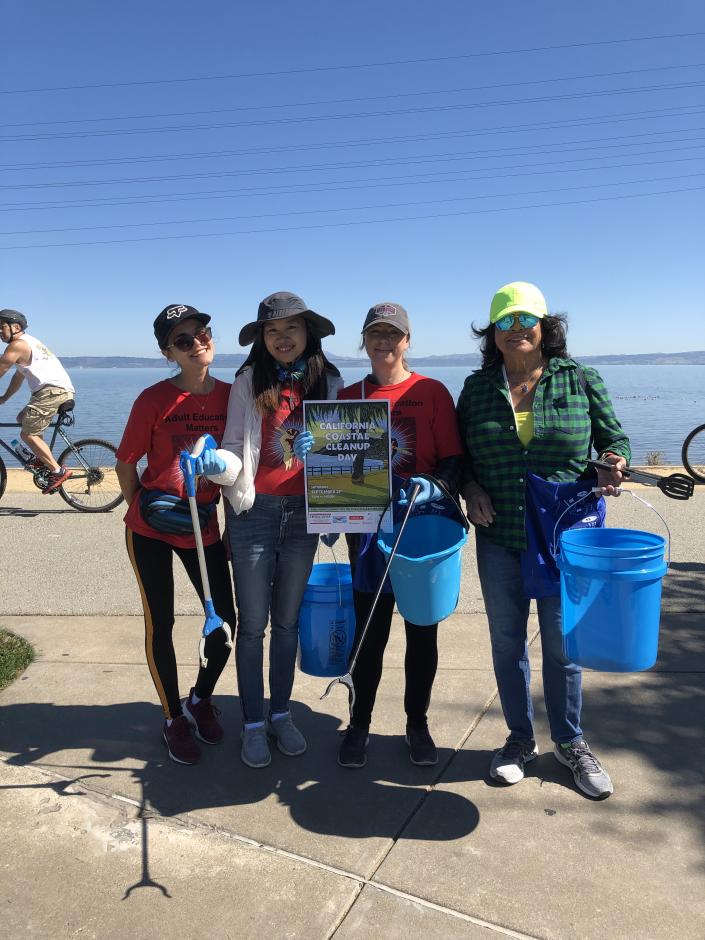
Coastal Cleanup Day (CCD) is an annual waterway and land cleanup held on the third Saturday of every September. It’s California’s largest volunteer event and brings community awareness to cleaning up and protecting the marine environment.
San Mateo County coordinates CCD in conjunction with the California Coastal Commission, the Ocean Conservancy, and many Statewide and local partners.
Cleanups are held at over 30 beaches, creeks, waterways, parks and neighborhoods throughout the County.
It would be interesting to be a member of groundwater foundation as groundwater guardian to provide support and encouragement for community to begin groundwater awareness activities, motivation to continue protecting the program, and recognition for program's achievements.
I believe the best way to change the policy in water protection would be active attendance and participation in various water safety events such as meetings, panels, and workshops. So I would have chance to meet the policymakers, members and staff of the San Mateo Countywide Water Coordination Committee to discuss local issues in water management, and have voice to change or support the strategies.
Saturday, March 2, 2019
Blog # 11
Transportation
Public transportation can provide significant health benefits. People who live or work in communities with high quality public transportation tend to own fewer vehicles, drive less, and use alternative modes more than they would in more automobile-oriented locations. This can provide large reductions in traffic crashes and pollution emissions, increases in physical fitness and mental health, and improved access to healthy food, housing and medical care. These health benefits are significant in magnitude compared with other planning objectives, but are often overlooked or undervalued in conventional transport planning. The U.S. has traffic fatality and obesity rates two or three times those of peers countries, which contribute to poor health outcomes (nearly a year shorter average life expectancy compared with the OECD average) and high per capita healthcare costs (two-and-a-half the OECD average).
Travel activity affects public health in several ways. For example, pollution contributes to cancer and congenital anomalies (birth defects), and sedentary living (inadequate physical activity) contributes to heart disease and strokes.

The three major public transit providers in San Mateo County are the San Mateo County Transit District (SamTrans), BART, and Caltrain. SamTrans operates 76 routes, carrying more than 43,000 passengers each weekday and about 13 million riders per year. BART serves six stations with 36,577 average weekday station entries in the County. Caltrain boards more than 18,000 passengers each weekday at 12 stations in the county.
Shuttle services include nine employment shuttles in San Mateo County that travel to and from BART stations, as well as two community shuttles which travel from residential areas to retail and recreation destinations.
The District also operates Redi-Wheels paratransit service for persons with disabilities, and manages shuttle services. Discounted rates are available for seniors, persons with disabilities, Medicare cardholders and youth. One child (age 4 and younger) can ride free with each adult, senior or adult-disabled farepaying passenger.
Bicycling is one of the most cost-effective, cleanest ways of reducing automobile use in San Mateo County. The bicycle emits no air pollution and is virtually silent. Cycling is both energy-efficient and space efficient. A cyclist requires only one-fifth the energy of a pedestrian to travel one kilometer.Bicycles offer other considerable personal and social benefits over the automobile, including substantially lower acquisition and maintenance costs, as well as health benefits.A major impediment to bicycle use in San Mateo County is that the road network has been principally designed for the automobile. At times and in some locations, this means reduced safety and comfort for bicyclists.
A total of 54 off-street and 177 on-street bicycle facilities comprising a 231-mile network were identified in the San Mateo County in the 2000 San Mateo County Comprehensive Bicycle Route Plan. As of 2010, 141 miles (61%) of the network has been completed, including 42 miles of off-street facilities and 99 miles of on-street facilities. Helping people who do not currently bicycle overcome their reluctance to do so on the roadway, as well as to make all bicyclists safer and more comfortable, requires a comprehensive set of measures. Engineering streets and roads so that they accommodate the needs of bicyclists, including space in which to ride, safe navigation through intersections, and lowering the speed differential between motor vehicles and bicycles, creates a safe operating environment for cycling. Education in safe cycling in traffic, as well as in rules of the road as they pertain to both cyclists and motorists is essential. Encouragement and cultural support in affirmation of bicycling as an accepted mode of everyday travel is needed from the wider community. Enforcement of traffic laws as they pertain both to motorists and cyclists provides legal sanctions to those who uses either mode of travel in an imprudent way. Evaluation provides valuable feedback on the effectiveness of the improvements. All of these approaches are currently being used in San Mateo County to support bicycle travel.
Bicycling Objectives of San Mateo county:
1. Increase the number of miles of Class I, II, III and IV bikeways as part of a comprehensive network of bicycle facilities in San Mateo County.
2. Increase the number of bicycle lockers and racks in San Mateo County.
3. Increase bicycle safety education and training in San Mateo County.
4. Establish bike sharing programs in San Mateo County.
5. Increase bicycle mode share for all trips originating in San Mateo County over both a ten-year and twenty-five-year horizon
6. Increase bicycle mode share for trips to work over both a ten-year and twenty-five-year horizon
As a professional nurse I can work with local, and county agencies and organizations – including those with a focus on public health – to develop effective encouragement programs that promote bicycling as a safe, convenient and healthy mode of transportation. Also, I can be cooperative with public health department of San Mateo county to educate the public such as drivers and bicyclists about their rights and responsibilities, as well as traffic education and safety programs for adults and youth, encourage local school districts to implement projects and activities that promote bicycling to school among students and staff, such as Safe Routes to School initiatives, and encourage efforts to establish bike-sharing programs in communities throughout the county.
For sure the neighborhood cities like Redwood city, Burlingame, Foster city, San Carlos can benefit from advancing bicycle strategy in San Mateo and follow San Mateo cycling approach as a model.
San Mateo County has established an urban/rural boundary in the Coastal Zone. A San Mateo County in which bicycling for both transportation and recreation is safe, comfortable, and convenient. Provide people with viable travel choices and encourage use of healthy, active transportation through a safe, continuous, convenient and comprehensive bicycling network that reduces reliance on the automobile for short trips. A number of commuters travel from rural to urban areas within San Mateo county for different purposes like school, work, and shopping. The bicycle plan could encourage them to cycle as well as use public transportation in the urban area. Also, provide public training, technical assistance, along with funding could be essential support to develop bicycle plan at non-urbanized San Mateo county.

Decision making about health-related programs and policies first require credible information on causes of health burden and health disparities. Social, economic, and physical environments are the major underlying determinants of the health of populations and variations among subpopulations.
The built environment influences the public’s health, particularly in relation to chronic diseases. There is good evidence to indicate that the burden of chronic disease in the population can be reduced through an active lifestyle, proper nutrition, and reduced exposure to toxic conditions.
Law influences the built environment in a variety of ways, ranging from environmental regulation, zoning, and building codes to economic incentives and disincentives. The public health community can use its voice, expertise, and influence to encourage legislatures and agencies to create and enforce laws designed to ensure the conditions for people to be healthy. The concluding section presents 7 strategies for accomplishing this goal.
Public health expertise is critical to the process. The following guidelines will help public health advocates become a constructive and effective voice:
Blog # 12
Students and school staff deserve and expect a healthy and comfortable environment in which to learn and teach. Within the school environment, reduced indoor air quality (IAQ) due to a lack of fresh air, chemical and biological contaminants, temperature, and humidity has resulted in student and staff health concerns. These concerns may be expressed as complaints of: headaches, rashes, tiredness, respiratory or eye irritation; and may result from single or multiple factors. An open and proactive response to an expressed IAQ concern can prevent a minor situation from becoming a major problem.
As a health professional, I can collaborate with the EPA to address disproportionate exposures to air pollution in communities, improve communication with the students' parents on steps to reduce exposures. In addition, I can help local schools to recognize how the health benefits associated with clean air, including fewer missed days at school due to illness, far outweigh the costs of air pollution control.
Assessing exposures near public schools in the vicinity of freeways, industrial facilities, and power plants should be a priority, and the impact of land-use planning and infrastructure decisions on air pollution exposure needs to be reexamined. Also, visiting local schools to talk about environmental conservation on asthma awareness days, disseminating information about the Air Quality Index can be effective approaches. So I can set an example for young people by thinking globally and acting locally.
NEWS
BY ELIZABETH SEGRAN
For the past three decades, fashion brands have perfected the art of manufacturing cheap clothing by relying on poorly paid labor in developing countries, inventing inexpensive plastic-based materials, and increasing the speed of production. And because most brands project what customers will want to buy six to nine months in advance, designers rarely get their predictions right. There are always some looks that nobody wants to buy. When brands churn out thousands of new looks every season, the problem of unsold inventory just scales up. The New York Times reports that a power plant in Vasteras, the Swedish town where H&M launched, relies partly on burning products that the company cannot sell as a fuel source.It is becoming increasingly clear that the fashion industry is contributing the the rapid destruction of our planet. A United Nations report says that we’re on track to increase the world’s temperature by 2.7 degrees by 2040, which will flood our coastlines, intensify droughts, and lead to food shortages. Activists, world leaders, and the public at large are just beginning to reckon with the way the fashion industry is accelerating the pace of climate change.

Cuyana, whose tagline is “fewer better things,” is one; the company’s founders, Karla Gallardo and Shilpa Shah, believe in doing extensive focus groups and consumer research to create long-lasting and versatile products that respond to a clear need in the market. The brand’s website encourages women to think carefully before making purchases.
Convincing women to buy less has not hurt Cuyana’s bottom line. While the eight-year-old brand is hard to compare to fashion giants, it recently announced that it was profitable.
These startups are under a decade old, and they’re still small compared to enormous conglomerates like H&M, Gap Inc., and Inditex, which owns Zara. But one thing is for sure: These startups are growing while fast-fashion brands are on the decline. Their focus on marketing durability and timeless style hints at a sea change among consumers, who appear to be tired of the status quo of large companies competing on price while compromising on quality. Time will tell if fashion giants will realize there’s money to be made in selling fewer but better products. Not only would we be more more satisfied with our clothes–we’d be preserving the planet on which we wear them.
Transportation
Public transportation can provide significant health benefits. People who live or work in communities with high quality public transportation tend to own fewer vehicles, drive less, and use alternative modes more than they would in more automobile-oriented locations. This can provide large reductions in traffic crashes and pollution emissions, increases in physical fitness and mental health, and improved access to healthy food, housing and medical care. These health benefits are significant in magnitude compared with other planning objectives, but are often overlooked or undervalued in conventional transport planning. The U.S. has traffic fatality and obesity rates two or three times those of peers countries, which contribute to poor health outcomes (nearly a year shorter average life expectancy compared with the OECD average) and high per capita healthcare costs (two-and-a-half the OECD average).
Travel activity affects public health in several ways. For example, pollution contributes to cancer and congenital anomalies (birth defects), and sedentary living (inadequate physical activity) contributes to heart disease and strokes.
The three major public transit providers in San Mateo County are the San Mateo County Transit District (SamTrans), BART, and Caltrain. SamTrans operates 76 routes, carrying more than 43,000 passengers each weekday and about 13 million riders per year. BART serves six stations with 36,577 average weekday station entries in the County. Caltrain boards more than 18,000 passengers each weekday at 12 stations in the county.
Shuttle services include nine employment shuttles in San Mateo County that travel to and from BART stations, as well as two community shuttles which travel from residential areas to retail and recreation destinations.
The District also operates Redi-Wheels paratransit service for persons with disabilities, and manages shuttle services. Discounted rates are available for seniors, persons with disabilities, Medicare cardholders and youth. One child (age 4 and younger) can ride free with each adult, senior or adult-disabled farepaying passenger.
Bicycling is one of the most cost-effective, cleanest ways of reducing automobile use in San Mateo County. The bicycle emits no air pollution and is virtually silent. Cycling is both energy-efficient and space efficient. A cyclist requires only one-fifth the energy of a pedestrian to travel one kilometer.Bicycles offer other considerable personal and social benefits over the automobile, including substantially lower acquisition and maintenance costs, as well as health benefits.A major impediment to bicycle use in San Mateo County is that the road network has been principally designed for the automobile. At times and in some locations, this means reduced safety and comfort for bicyclists.
A total of 54 off-street and 177 on-street bicycle facilities comprising a 231-mile network were identified in the San Mateo County in the 2000 San Mateo County Comprehensive Bicycle Route Plan. As of 2010, 141 miles (61%) of the network has been completed, including 42 miles of off-street facilities and 99 miles of on-street facilities. Helping people who do not currently bicycle overcome their reluctance to do so on the roadway, as well as to make all bicyclists safer and more comfortable, requires a comprehensive set of measures. Engineering streets and roads so that they accommodate the needs of bicyclists, including space in which to ride, safe navigation through intersections, and lowering the speed differential between motor vehicles and bicycles, creates a safe operating environment for cycling. Education in safe cycling in traffic, as well as in rules of the road as they pertain to both cyclists and motorists is essential. Encouragement and cultural support in affirmation of bicycling as an accepted mode of everyday travel is needed from the wider community. Enforcement of traffic laws as they pertain both to motorists and cyclists provides legal sanctions to those who uses either mode of travel in an imprudent way. Evaluation provides valuable feedback on the effectiveness of the improvements. All of these approaches are currently being used in San Mateo County to support bicycle travel.
Bicycling Objectives of San Mateo county:
1. Increase the number of miles of Class I, II, III and IV bikeways as part of a comprehensive network of bicycle facilities in San Mateo County.
2. Increase the number of bicycle lockers and racks in San Mateo County.
3. Increase bicycle safety education and training in San Mateo County.
4. Establish bike sharing programs in San Mateo County.
5. Increase bicycle mode share for all trips originating in San Mateo County over both a ten-year and twenty-five-year horizon
6. Increase bicycle mode share for trips to work over both a ten-year and twenty-five-year horizon
As a professional nurse I can work with local, and county agencies and organizations – including those with a focus on public health – to develop effective encouragement programs that promote bicycling as a safe, convenient and healthy mode of transportation. Also, I can be cooperative with public health department of San Mateo county to educate the public such as drivers and bicyclists about their rights and responsibilities, as well as traffic education and safety programs for adults and youth, encourage local school districts to implement projects and activities that promote bicycling to school among students and staff, such as Safe Routes to School initiatives, and encourage efforts to establish bike-sharing programs in communities throughout the county.
For sure the neighborhood cities like Redwood city, Burlingame, Foster city, San Carlos can benefit from advancing bicycle strategy in San Mateo and follow San Mateo cycling approach as a model.
San Mateo County has established an urban/rural boundary in the Coastal Zone. A San Mateo County in which bicycling for both transportation and recreation is safe, comfortable, and convenient. Provide people with viable travel choices and encourage use of healthy, active transportation through a safe, continuous, convenient and comprehensive bicycling network that reduces reliance on the automobile for short trips. A number of commuters travel from rural to urban areas within San Mateo county for different purposes like school, work, and shopping. The bicycle plan could encourage them to cycle as well as use public transportation in the urban area. Also, provide public training, technical assistance, along with funding could be essential support to develop bicycle plan at non-urbanized San Mateo county.
Decision making about health-related programs and policies first require credible information on causes of health burden and health disparities. Social, economic, and physical environments are the major underlying determinants of the health of populations and variations among subpopulations.
The built environment influences the public’s health, particularly in relation to chronic diseases. There is good evidence to indicate that the burden of chronic disease in the population can be reduced through an active lifestyle, proper nutrition, and reduced exposure to toxic conditions.
Law influences the built environment in a variety of ways, ranging from environmental regulation, zoning, and building codes to economic incentives and disincentives. The public health community can use its voice, expertise, and influence to encourage legislatures and agencies to create and enforce laws designed to ensure the conditions for people to be healthy. The concluding section presents 7 strategies for accomplishing this goal.
Public health expertise is critical to the process. The following guidelines will help public health advocates become a constructive and effective voice:
- Get involved early in the planning process. Critical decisions about land use and the built environment are made through a legal process. Once specific projects are proposed and presented to the public, it may be too late to have significant impact on what is built–the important ground rules are likely to have been set far in advance.
- Bring data to the table. Public health scientists bring unique training in epidemiology and empirical analysis. Scientific data on the kinds of designs and land-use arrangements that encourage physical activity are lacking. Urban planners have instincts in this area, but these instincts may not be supported by sound data.
- Help policymakers use data more carefully. Policymakers are particularly influenced by actions that are immediately measurable, and bureaucracies are set up to reward those who show positive short-term changes. For example, highway departments may be rewarded for reducing pedestrian accidents by making a road so inhospitable that few pedestrians venture out. Public health officials may be able to provide data and a perspective to counteract this tendency.
- Be a voice that is independent of the environmental and esthetic concerns. Today, public health officials may find that they share much with the environmentalists and urban designers who promote compact, mixed-use development, but the agendas may not always be coextensive. Public health officials will be a credible and useful voice only if they maintain independence. For example, bicycle paths and sidewalks add impervious surfaces that may require felling trees or altering parkland. As a result, environmental groups that support the concept of increased walking and bicycling sometimes oppose the installation of trails and bicycle paths. Public health officials can clearly enunciate the health benefits of opportunities for safe, pleasant exercise.
- Promote healthy activities for children and particularly teenagers. Childhood obesity is a growing problem, and the patterns for a healthy (or unhealthy) lifestyle are frequently set in childhood. The voices of children and teenagers are left out of the planning process. Teenagers in particular may have interests that conflict with the preferences of adults. Activities that attract groups of teenagers can be viewed as threatening and undesirable. For example, homeowner associations may prohibit the installation of driveway basketball nets because they are unsightly and the games may get loud. Likewise, although new residential subdivisions may be required to include recreational facilities, developers rarely include facilities that would be of interest to teenagers, preferring instead “tot lots.”
- Be a voice for underrepresented populations and minorities. Poor, immigrant, and minority populations suffer much higher rates of chronic disease. They are also much more likely to live in substandard housing, to be exposed to environmental toxins, and to be the victims of unsafe pedestrian facilities. From the interstate highway program of the 1950s and 1960s that razed thousands of low-income housing units to rezoning for industrial uses, poor and minority populations have borne the brunt of some highly destructive land-use decisions.
- Encourage government to lead by example, not just by regulation. Governments invest extensively in the built environment through construction and maintenance of roads, public transportation, and public buildings and facilities. These can be located and designed to encourage walking, bicycling, and other physical activity. Public health officials can be a voice to encourage comprehensive planning that considers not only the immediate purpose (e.g., Will this be a good library?), but also how the facility functions in the community to encourage healthy choices.
Public health can be an influential voice in shaping the built environment. If advocates demonstrate competence in the legal process and use their expertise effectively, physical spaces can be designed to promote healthy populations.
Blog # 12
Healthy Schools
There are community nurses in San Mateo county involved in local schools and have responsibility to maintain students health. Family Health and General Field Nursing provide services in homes, local clinics, offices and schools as well. Services are free for adults, children and families on Medi-Cal, and on a sliding fee scale for other San Mateo County residents. They provide following services in native languages.
- Help identify individual and family needs
- Connect clients to community resources
- Education about specific health issues
Tongan Health project have collaborated with the Pacific Islander Initiative within the Behavioral Health and Recovery Services Division to understand and address the issues identified by the Pacific Islander community in San Mateo County. The work began with a collaboration on a cancer screening outreach effort and has evolved into the Mana Program for Pacific Islander Students at San Mateo High School.
Students and school staff deserve and expect a healthy and comfortable environment in which to learn and teach. Within the school environment, reduced indoor air quality (IAQ) due to a lack of fresh air, chemical and biological contaminants, temperature, and humidity has resulted in student and staff health concerns. These concerns may be expressed as complaints of: headaches, rashes, tiredness, respiratory or eye irritation; and may result from single or multiple factors. An open and proactive response to an expressed IAQ concern can prevent a minor situation from becoming a major problem.
To assess indoor air quality of local schools, I would assess the following factors and interview with students to answer as many of the following questions.
As a health professional, I can collaborate with the EPA to address disproportionate exposures to air pollution in communities, improve communication with the students' parents on steps to reduce exposures. In addition, I can help local schools to recognize how the health benefits associated with clean air, including fewer missed days at school due to illness, far outweigh the costs of air pollution control.
Assessing exposures near public schools in the vicinity of freeways, industrial facilities, and power plants should be a priority, and the impact of land-use planning and infrastructure decisions on air pollution exposure needs to be reexamined. Also, visiting local schools to talk about environmental conservation on asthma awareness days, disseminating information about the Air Quality Index can be effective approaches. So I can set an example for young people by thinking globally and acting locally.
NEWS
- 7:00 AM
We have to fix fashion if we want to survive the climate crisis
The industry churned out 100 billion pieces of clothing for 7 billion people in 2015. The problem is so bad, some brands are burning unsold inventory. The waste has got to stop.
For the past three decades, fashion brands have perfected the art of manufacturing cheap clothing by relying on poorly paid labor in developing countries, inventing inexpensive plastic-based materials, and increasing the speed of production. And because most brands project what customers will want to buy six to nine months in advance, designers rarely get their predictions right. There are always some looks that nobody wants to buy. When brands churn out thousands of new looks every season, the problem of unsold inventory just scales up. The New York Times reports that a power plant in Vasteras, the Swedish town where H&M launched, relies partly on burning products that the company cannot sell as a fuel source.It is becoming increasingly clear that the fashion industry is contributing the the rapid destruction of our planet. A United Nations report says that we’re on track to increase the world’s temperature by 2.7 degrees by 2040, which will flood our coastlines, intensify droughts, and lead to food shortages. Activists, world leaders, and the public at large are just beginning to reckon with the way the fashion industry is accelerating the pace of climate change.
Cuyana, whose tagline is “fewer better things,” is one; the company’s founders, Karla Gallardo and Shilpa Shah, believe in doing extensive focus groups and consumer research to create long-lasting and versatile products that respond to a clear need in the market. The brand’s website encourages women to think carefully before making purchases.
Convincing women to buy less has not hurt Cuyana’s bottom line. While the eight-year-old brand is hard to compare to fashion giants, it recently announced that it was profitable.
These startups are under a decade old, and they’re still small compared to enormous conglomerates like H&M, Gap Inc., and Inditex, which owns Zara. But one thing is for sure: These startups are growing while fast-fashion brands are on the decline. Their focus on marketing durability and timeless style hints at a sea change among consumers, who appear to be tired of the status quo of large companies competing on price while compromising on quality. Time will tell if fashion giants will realize there’s money to be made in selling fewer but better products. Not only would we be more more satisfied with our clothes–we’d be preserving the planet on which we wear them.
Saturday, February 23, 2019
Blog # 9
Air Pollution
Particle pollution consists of a mixture of solids and liquid droplets.Particle pollution levels can be very unhealthy and even hazardous during events such as forest fires. Particle levels can be elevated indoors, especially when outdoor particle levels are high.

Ozone affects the lungs and respiratory system in many ways. It can:
Blog # 10

Air Pollution
Particle pollution consists of a mixture of solids and liquid droplets.Particle pollution levels can be very unhealthy and even hazardous during events such as forest fires. Particle levels can be elevated indoors, especially when outdoor particle levels are high.
Sensitive groups for particle pollution include people with heart or lung disease (including heart failure and coronary artery disease, or asthma and chronic obstructive pulmonary disease), older adults (who may have undiagnosed heart or lung disease), and children. The risk of heart attacks, and thus the risk from particle pollution, may begin as early as the mid-40s for men and mid-50s for women.
- Irritate the respiratory system
- Reduce lung function
- Inflame and damage the cells that line the lungs
- Make the lungs more susceptible to infection
- Aggravate asthma
- Aggravate other chronic lung diseases such as emphysema and bronchitis
- Cause permanent lung damage
Carbon monoxide is an odorless, colorless gas. It forms when the carbon in fuels does not completely burn.Carbon monoxide enters the bloodstream through the lungs and binds to hemoglobin, the substance in blood that carries oxygen to cells. It reduces the amount of oxygen reaching the body’s organs and tissues.
- People with cardiovascular disease, such as coronary artery disease, are most at risk. They may experience chest pain and other cardiovascular symptoms if they are exposed to carbon monoxide, particularly while exercising.
- People with marginal or compromised cardiovascular and respiratory systems (for example, individuals with congestive heart failure, cerebrovascular disease, anemia, or chronic obstructive lung disease), and possibly young infants and fetuses, also may be at greater risk from carbon monoxide pollution.
- In healthy individuals, exposure to higher levels of carbon monoxide can affect mental alertness and vision.
Sulfur dioxide, a colorless, reactive gas, is produced when sulfur-containing fuels such as coal and oil are burned. Generally, the highest levels of sulfur dioxide are found near large industrial complexes. Major sources include power plants, refineries, and industrial boilers.
- People with asthma who are physically active outdoors are most likely to experience the health effects of sulfur dioxide. The main effect, even with very brief exposure (minutes), is a narrowing of the airways (called bronchoconstriction). This may be accompanied by wheezing, chest tightness, and shortness of breath, which may require use of medication that opens the airways. Symptoms increase as sulfur dioxide levels or breathing rate increases. When exposure to sulfur dioxide ceases,lung function typically returns to normal within an hour,even without medication.
- At very high levels, sulfur dioxide may cause wheezing, chest tightness, and shortness of breath even in healthy people who do not have asthma.
- Long-term exposure to sulfur dioxide may cause respiratory symptoms and illness, and aggravate asthma. People with asthma are the most susceptible to sulfur dioxide. However, people with other chronic lung diseases or cardiovascular disease, as well as children and older adults, may also be susceptible to these effects.
A key tool in this effort is the Air Quality Index, or AQI. EPA and local officials use the AQI to provide simple information about your local air quality, how unhealthy air may affect you, and how you can protect your health.
I read about impact of air pollution on immune system. Negative health effects from the chronic inhalation of polluted air are well known to cause cardio-respiratory disease. It can be particularly damaging to seniors, children, and people with asthma. According to a study from Ohio State University, breathing polluted air can also cause widespread inflammation by triggering the release of white blood cells from bone marrow into the blood stream. The influx of white blood cells can alter the integrity of the blood vessels. The white blood cells are then absorbed into fat tissues where chemicals are released that cause inflammation.
To reduce my impact on air quality, I can:
- Choose a cleaner commute — car pool, using public transportation, bike or walk when possible.
- Follow manufacturers' recommendations for use and properly seal cleaners, paints, and other chemicals to prevent evaporation into the air
- Educate my community to monitor the local Air Quality Index (AQI) daily and follow the necessary precautions based on the level of AQI eg. When AQI values are between 101 and 150, members of sensitive groups may experience health effects, but the general public is unlikely to be affected. So The following groups should reduce prolonged or heavy outdoor exertion:The following groups should reduce prolonged or heavy outdoor exertion:
- People with lung disease, such as asthma
- Children and older adults
- People who are active outdoors
Local particulate Air pollution (PM2.5) in San Mateo, CA was 7.2 (μg/m3), AQI : 28.8, and health category was good by utilizing air assessment tool. Since 1955, the Air District has worked to improve air quality in the Bay area. The first regulation aimed at reducing air pollution banning open burning at dumps and wrecking yards is adopted in 1957.
The journal articles were not associated to my current practice. However, a article was very interesting to me.
Pesticide-Poisoned Patients: Can They Be Used as Potential Organ Donors?
The gap between the number of patients on transplant waiting lists and patients receiving transplants is growing. Use of organs from donors who have died following pesticide exposure remains controversial. Overall survival with good function was 96%, 71%, 83%, and 67% for kidneys, livers, corneas and hearts respectively.Review of the published literature suggests that solid organ donation following exposure to a pesticide is associated with good short-to-medium-term graft organ function following transplantation, particularly for transplanted kidneys and corneas.
The best strategy for me to help patients and reducing the effect of air pollution on them is education. Providing information to patients, their families, and parents of pediatric patients about impacts of various pollutants on health, aggravating cardiovascular, respiratory, kidney, and other diseases, how to help to clean the air, and how to monitor air quality index can be very helpful.
Blog # 10
Indoor Air Quality
It has been estimated that people spend about 90% of their time in both private and public indoor environments, such as homes, gyms, schools, work places, transportation vehicles, etc.; thus, IAQ has a significant impact on health and quality of life in general. For many people, the health risks from exposure to indoor air pollution may be greater than those related to outdoor pollution. In particular, poor indoor air quality can be harmful to vulnerable groups such as children, young adults, the elderly, or those suffering chronic respiratory and/or cardiovascular diseases.
Most indoor air pollution originates from sources that release gases or particles into the air. Candles, air fresheners, cleaning products and other household items can be potential culprits of air pollutants in your home.
In my home, whenever is possible I open the doors and windows for having fresh air and better ventilation. For home hygiene, I also clean the surfaces with diluted vinegar. But, since we have yard and garden, we expose to pollen and allergens which trigger my husband's allergy symptoms especially in spring.
The floor of my house is covered by carpets. So I am concerning about the impacts of carpet and formaldehyde on our health.
New carpeting is a primary source of volatile organic compounds (VOCs), which can include highly toxic chemicals such as formaldehyde and acetaldehyde. The largest release of VOCs from new carpeting will occur in the first 72 hours after installation.
New carpet installation is associated with wheezing and coughing in babies during their first year of life.
Consider carpeting and rugs made from natural materials like wool, which will (typically) not contain flame-retardants or stain-resistant chemicals and will naturally repel insects.
Make sure you regularly ventilate your home by opening windows on opposite sides of the house so the toxic fumes can be exchanged for outside air.
Patients and their family need to know about indoor air quality, cooking risks and ensuring air flow. Thus, I educate them about these important issues.
NEWS
Feb 19, 2019
Plastic threatens our health from before production to long after it’s thrown away: Report
Two-thirds of all plastic ever produced remains in the environment
Subscribe to:
Posts (Atom)